
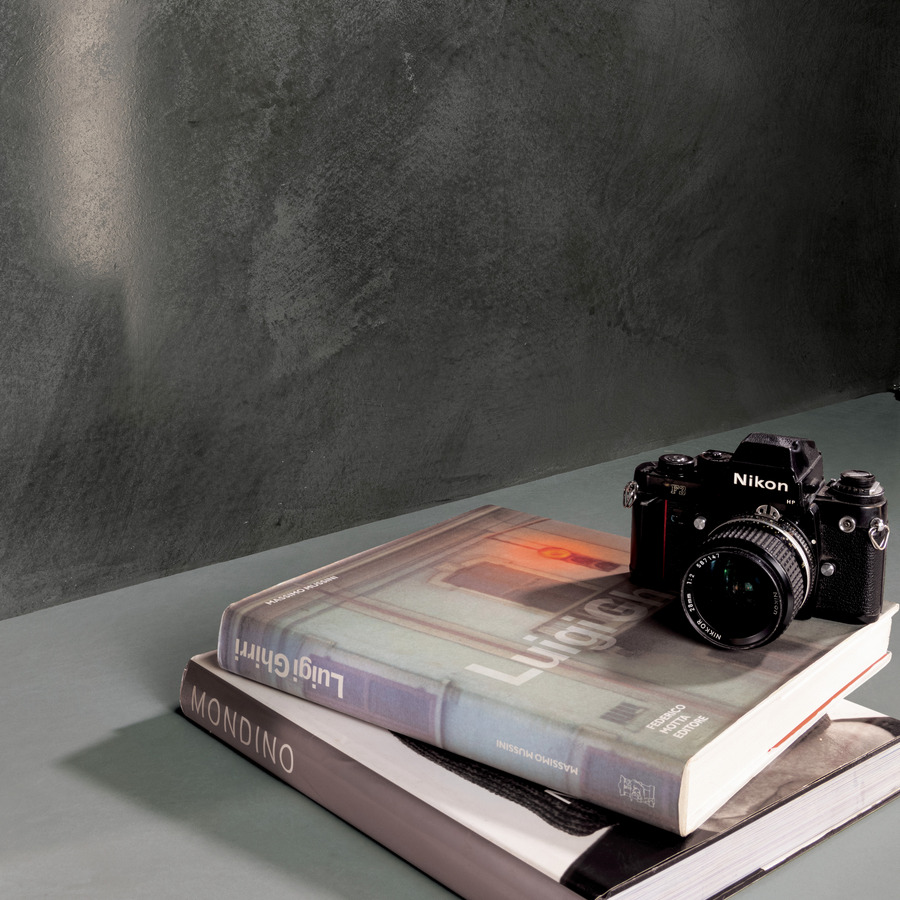
Grassello di Calce: Italy's Most Treasured Wall Finish
Ready to Transform Your Walls?
Get samples, pricing, or connect with a certified applicator.
Introduction
Grassello di calce represents the pinnacle of Italian plaster craftsmanship. This untranslatable term—roughly “lime curds”—refers to specially prepared aged lime putty that creates wall finishes of such refined beauty that they’re considered luxury elements in the world’s finest homes. Understanding grassello di calce means entering the rarefied world where material science meets centuries of artisan tradition. It’s a finish so distinctive that interior designers and architects specify it by name, and a material so valued that builders from New York to Tokyo source it directly from Italian suppliers. This exploration reveals what makes grassello di calce exceptional and why this ancient material remains the gold standard for discerning patrons.
What Makes Grassello di Calce Special: The Chemistry of Excellence
The Definition: More Than Just Aged Lime
Grassello di calce is not simply old lime putty, though aging is crucial to its development. It’s specifically lime putty that has been carefully prepared, properly stored, and matured according to exacting standards.
Essential components:
Lime putty base: Pure slaked lime (calcium hydroxide) without additives—the foundation of the material.
Marble dust: Ultra-fine marble powder, traditionally sourced from Italian marble quarries. The particle size is crucial—grassello uses dust so fine it’s nearly invisible, creating an exceptionally smooth finish.
Aging: The critical factor. Grassello di calce is aged for months to years in specific conditions (typically in large earthenware crocks partially submerged in water, preventing oxygen from interfering with the aging process).
Water content: Grassello maintains specific moisture levels maintained through careful storage. Too dry and it becomes stiff; too wet and it becomes unworkable.
The result is a material with plasticity and workability that fresh lime putty cannot match. Well-aged grassello flows under the trowel like silk, compresses cleanly, and creates surfaces of extraordinary refinement.
The Aging Process: Why Time Matters
The aging of grassello di calce is not merely incidental—it’s fundamental to the material’s character.
Months 0-3: Fresh lime putty begins developing. Any large particles begin settling; the material develops more homogeneous consistency.
Months 3-12: The turning point. The lime develops finer particle structure. Workability improves noticeably. Color begins subtle shifts toward warmer tones.
Months 12-24: Enhanced plasticity. The material has developed optimal working properties. Color has stabilized into warm, sophisticated tones. Microstructure continues refining.
Years 2-5: Premium grassello. The material has achieved maximum plasticity, workability, and subtle color character. Some Italian suppliers age grassello for 5+ years, creating materials of exceptional refinement.
Beyond 5 years: Diminishing returns. While aged grassello continues developing subtle characteristics, 5-year-aged material is considered mature.
The process is time-intensive and therefore expensive. A supplier aging grassello for 3-5 years is tying up significant material and storage space. This is why premium grassello di calce commands premium prices—the aging process itself represents substantial investment.
Chemical Transformation During Aging
During aging, grassello undergoes subtle but significant transformations:
Particle size reduction: Natural grinding processes within the aged lime reduce particle size, creating finer material.
pH stabilization: The lime reaches optimal alkalinity for the specific marble dust blend.
Moisture equilibration: The material develops consistent moisture distribution throughout.
Crystal structure refinement: At the molecular level, crystalline structures within the lime develop more refined organization.
These transformations aren’t visible, but their effects are profound—aged grassello is demonstrably superior to fresh lime putty in workability, finish quality, and durability.
Historical Significance: Grassello in Venerable Structures
Venetian Palaces: The Gold Standard
Grassello di calce’s reputation is built on its use in Venice’s greatest buildings. The Doge’s Palace, Ca’ d’Oro, Palazzo Contarini del Bovolo, and countless other Venetian masterpieces feature grassello finishes that have endured centuries in Venice’s demanding climate—constant humidity, salt spray, thermal cycling, and moisture exposure that would destroy lesser materials.
These walls are studied by contemporary craftspeople as standards of excellence. Modern plasterers traveling to Venice document grassello finishes, analyzing their characteristics and attempting to understand what made them so durable.
The remarkable durability of Venetian grassello finishes isn’t accidental. Venetian craftspeople developed these techniques specifically because Venice’s climate demanded materials and methods superior to what worked elsewhere.
Renaissance Palaces and Villas
Beyond Venice, Renaissance Italy saw grassello used in the greatest residences. Palaces in Florence, Rome, and throughout Italy feature plaster work that remains strikingly beautiful centuries later.
Filippino Lippi’s frescoes in Brancacci Chapel (Florence) were painted on grassello plaster substrate—the substrate itself is considered part of the artwork. The fact that the plaster remains virtually unchanged after 500+ years testifies to grassello’s durability.
Architectural historians increasingly recognize that grassello isn’t just a finish—it’s foundational to Renaissance interiors. The aesthetic sophistication of Renaissance rooms depends partly on the refined plaster grounds beneath frescoes and other artworks.
Historical Context: Why Venice Developed Grassello
Understanding grassello’s origins illuminates why it became so refined. Venice’s unique challenges created specific requirements:
Salt spray: Sea air damages most materials. Grassello developed partly as a salt-resistant finish—the lime chemistry naturally resists corrosion from salt-laden air.
Humidity: Venice’s constant high humidity would degrade lesser finishes. Grassello’s vapor-permeable nature allows moisture to pass through without accumulating, preventing the substrate failure that sealed materials develop.
Temperature cycling: Water freezes and thaws, expands and contracts. Grassello accommodates this movement; rigid, sealed finishes crack.
Structural movement: Venice’s buildings sit on pilings in soft soil, causing constant subtle structural movement. Grassello flexes and accommodates this movement; brittle finishes crack.
Venetian builders, solving practical problems in a hostile climate, developed grassello as the optimal solution. That this solution also happens to be extraordinarily beautiful is perhaps secondary—it emerged from practical necessity.
The Sensory Quality: Why Grassello Feels Different
Beyond chemistry and history, grassello di calce possesses sensory qualities that distinguish it from other plasters.
Touch: A Silky Aesthetic
Run your hand across aged grassello, and you experience something distinct. The surface is smooth but not slick, soft to the touch but not powdery, refined but with the slight texture of a natural material.
This tactile quality comes from the ultra-fine marble dust and the specific surface compression achieved during application. Modern materials rarely achieve this specific silky quality—it’s distinctive enough that craftspeople can recognize grassello by touch alone.
This tactile refinement contributes to the psychological impact of grassello spaces. People respond positively to surfaces that feel natural and refined under the hand. Grassello delivers this response in a way that industrial finishes cannot.
Vision: Luminosity and Depth
Grassello possesses an almost luminous quality. Unlike flat paint that simply reflects light, grassello’s marble dust content allows light to interact subtly throughout the material’s depth. The wall seems to glow from within rather than simply reflect light from its surface.
This luminosity is particularly apparent in north-facing walls (without direct sunlight) where the indirect quality reveals plaster’s internal light-scattering properties. A north-facing wall of grassello appears brighter than the light conditions would suggest—the plaster itself seems to generate light.
This quality explains why grassello is so effective in interior spaces. Even in rooms without bright direct light, the material maintains luminosity and visual presence.
Color: Subtle and Sophisticated
The color of aged grassello is distinctive. Depending on the specific marble dust source and aging time, grassello develops warm, sophisticated tones:
- Neutral whites: Not the clinical white of fresh plaster, but warm, cream-tinted whites
- Warm beiges: Subtle earth tones suggesting limestone
- Soft grays: Warm rather than cool, with hints of beige or ochre
- Subtle variations: Even within a single finish, gentle color variation adds character
This color doesn’t feel applied or artificial—it emerges from the material’s composition. The color is the marble dust and lime expressing their nature.
Application Technique: How Grassello’s Refinement is Achieved
Substrate Preparation: The Foundation
Grassello’s success depends on proper substrate preparation. The application surface must be:
- Absolutely clean: Dust, dirt, or contamination compromises adhesion
- Properly primed: A bonding primer ensures mechanical adhesion
- Moisture stable: Substrates shouldn’t be wet, but shouldn’t be excessively dry either
- Smooth: While grassello can be applied over textured substrates, the finest finishes begin with smooth preparation
Multi-Layer Application: Building Refinement
Grassello is never a single-coat application. Professional artisans apply multiple layers, typically 3-5 coats:
First coat (scratch coat): Creates mechanical bond to substrate. Applied slightly thicker than subsequent coats, this layer ensures adhesion.
Second coat (brown coat): Begins building the finish. Applied to a thickness that supports final coats while maintaining workability.
Finish coats (2-3): Create the final surface. These layers receive careful troweling and are finished to specific smoothness.
Each coat requires proper curing time (typically 24-48 hours between coats) and is slightly troweled to a specific consistency before burnishing.
Troweling: Technique and Pressure
The trowel work on grassello is where artisan skill becomes visible. Application isn’t mechanical—it’s carefully controlled and responsive to material behavior.
Pressure variation: Experienced craftspeople modulate trowel pressure throughout the application, creating subtle surface variations that prevent monotony.
Directional consistency: The direction of trowel strokes is maintained consistently (though very subtle variation can be intentional). This creates directional lines that subtly guide the eye.
Compression: As material is troweled, it compresses and becomes denser. The degree of compression affects the final finish—more compression creates smoother, more polished results.
Burnishing: Creating the Polish
Once plaster reaches leather-hard stage (firm but not fully cured), burnishing begins. Craftspeople use smooth stones or ceramic tools to compress the surface further.
Burnishing serves multiple purposes:
- Closes micro-pores in the plaster surface
- Creates subtle sheen without glossiness
- Develops color depth by reorienting particles
- Creates the distinctive silken texture characteristic of superior grassello
- Increases durability through surface compression
Proper burnishing is labor-intensive and requires skill. The pressure must be precisely calibrated—too light and the effect is negligible; too heavy and you risk damaging the plaster. Experienced craftspeople can assess surface hardness by touch and adjust pressure accordingly.
Modern Applications: Why Grassello Remains Relevant
High-End Residential Applications
Grassello di calce increasingly appears in luxury homes, particularly:
- Master bedrooms and bathrooms: Where homeowners seek premium retreat spaces
- Living rooms and libraries: In homes designed for contemplation and relaxation
- Custom homes and renovations: Where cost is less constraining than in speculative construction
- Homes of creative professionals: Where the refined aesthetic aligns with professional values
These applications share a common thread: grassello appeals to people who understand quality and are willing to invest in materials that improve with age.
High-End Hospitality
Luxury hotels and resorts specify grassello, particularly in:
- Presidential suites and premium rooms: Where the finest materials communicate luxury
- Spa and wellness areas: Where natural, refined finishes align with wellness branding
- Fine dining restaurants: Where material sophistication communicates culinary ambition
- Hotel entries and common areas: Where first impressions shape the guest experience
Hospitality applications benefit from grassello’s durability—high-traffic hotel finishes must withstand years of use while maintaining appearance. Properly maintained grassello endures this demand elegantly.
Historic Preservation and Restoration
The most important contemporary application of grassello is historic restoration. When original buildings featured grassello finishes, restoration with modern synthetic materials is inappropriate.
Why this matters:
Original grassello finishes allowed vapor transmission, accommodated building movement, and integrated with surrounding materials. Replacing grassello with modern synthetic finishes often causes rapid deterioration—the new finishes trap moisture or resist movement, damaging the historic structure.
Conversely, replacing grassello with grassello allows the building to function as originally designed. The restored finish is authentic both visually and functionally.
Major restoration projects globally—historic palaces, churches, significant civic buildings—increasingly specify grassello for this reason.
Giorgio Graesan’s Grassello Tradition
Giorgio Graesan manufactures grassello di calce products that honor centuries of Italian plaster craftsmanship tradition. Their grassello represents authentic aged lime putty that develops exceptional plasticity and refinement—the gold standard for luxury finishes.
Commitment to Historical Authenticity
Giorgio Graesan’s grassello products reflect deep commitment to historical traditions:
- Properly aged lime putty: Sourced and aged according to traditional protocols for optimal workability and development
- Quality marble dust: Carefully selected Italian marble dust to achieve specific color and texture
- Formulation consistency: Recipes follow traditional Italian proportions developed over centuries
- Verification of authenticity: Products are tested and verified to meet grassello di calce standards
This commitment means Giorgio Graesan grassello isn’t simply a product—it’s a faithful continuation of centuries-old tradition, modified minimally for contemporary building conditions. When you specify Giorgio Graesan grassello, you’re investing in authentic material that develops character and beauty for decades.
Why Specification Matters
Specifying by product name matters. “Grassello di calce” from a reputable supplier like Giorgio Graesan means something specific—you’re getting material formulated, aged, and prepared according to traditional standards.
Generic “aged lime putty” may or may not be genuine grassello. Working with established suppliers ensures authenticity and performance.
The Sensory and Psychological Impact: Why Grassello Matters Beyond Performance
The Psychology of Authentic Materials
Humans respond positively to authentic, handmade materials at a psychological level. Grassello delivers this authenticity:
- Material honesty: Grassello reveals what it is—lime, marble, and nothing else
- Handcraft visibility: The subtle variations from hand-application are visible, acknowledging human skill
- Natural aging: The material develops character over time rather than degrading
- Regional tradition: The finish connects to centuries of Italian craftsmanship
These characteristics activate positive psychological responses. People instinctively recognize quality and authenticity, even if they can’t articulate why a grassello wall feels superior to painted drywall.
The Contemplative Quality
Grassello interiors encourage contemplation. The refined, luminous walls—neither demanding attention through color nor retreating into blandness—create spaces conducive to thought and relaxation.
This is why grassello appears in bedrooms, studies, libraries, and spiritual spaces more often than in high-activity zones. The material’s character naturally supports these quiet, reflective purposes.
Cost and Value: Understanding the Investment
Material Cost
Genuine grassello di calce is expensive:
- Material cost alone: $15-25 per square foot
- Premium suppliers (aged 3-5 years): $20-30+ per square foot
- Price variation: Based on marble dust source, aging time, and supplier
This is substantially more than standard lime plaster ($8-15 per square foot) or modern finishes.
Installation Cost
Grassello requires experienced craftspeople:
- Application labor: $25-50+ per square foot depending on geographic location and artisan reputation
- Total installed cost: $40-75+ per square foot
For a 200 square foot room: $8,000-15,000 installed. This represents significant investment.
Value and Longevity
However, grassello’s value equation differs from contemporary finishes:
- Durability: Grassello lasts centuries (proven) while modern finishes last decades
- Aging: Grassello improves with age; modern finishes degrade
- Character: The patina that develops over decades increases rather than decreases appeal
- Maintenance: Grassello requires less maintenance than most alternatives
- Resale value: In premium markets, grassello significantly enhances property value
When amortized over decades and centuries, the cost premium becomes less dramatic. A 50-year-old grassello wall is more valuable than it was when new; a 50-year-old painted wall requires complete repainting.
Conclusion: Grassello di Calce as the Apex of Plaster Craftsmanship
Grassello di calce represents the culmination of centuries of Italian experimentation, refinement, and artisan tradition. It’s a material that emerged from practical necessity in Venice’s challenging climate, evolved into an art form, and remains the gold standard for luxury interior finishes.
The growing contemporary interest in grassello isn’t nostalgia or fashion. It’s recognition that this refined material delivers aesthetic, performance, and durability advantages that modern alternatives cannot match. In a world increasingly skeptical of industrial finishes and synthetic materials, grassello offers authenticity, natural composition, and timeless beauty.
For homeowners and designers seeking truly exceptional finishes—materials that will improve for decades and connect to centuries of tradition—grassello di calce remains without peer.
Interested in experiencing grassello di calce in your project? Contact Muro d’Arte to explore Giorgio Graesan’s grassello products. We can discuss whether grassello is appropriate for your project, arrange samples for evaluation in your actual space, and connect you with skilled artisans experienced in traditional grassello application. For historic restoration projects, grassello authentically serves both aesthetic and functional requirements. Let us help you understand whether this exceptional material is right for your vision.
Related Posts: